

When Mining and Industrial Coating Fails Before Commissioning
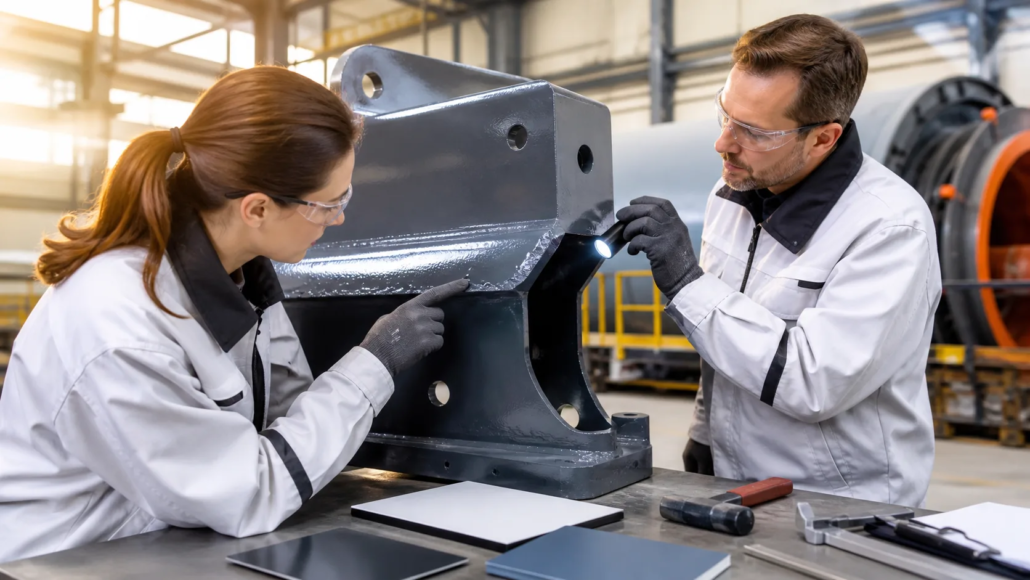
Coating failure found before commissioning is never a small issue. It can hold up handover, send fabricated parts back for rework, interrupt other trades and leave new equipment exposed to corrosion before operations begin. For project managers, fabricators and maintenance teams, protective finishing needs to be treated as a project control, not a final cosmetic touch.
November in Queensland can quickly expose weak points. High UV, heat, humidity and storm-driven moisture place fresh external steelwork under pressure soon after installation. In our experience, many mining and industrial coatings problems start long before an asset reaches site, during design, fabrication, preparation, product selection or cure checks.
Design Details Can Cause Early Coating Failure
A powder coating film can only protect the surface it is applied to. If a fabricated item has tight crevices, sharp edges, unsealed hollow sections or places where water can sit, corrosion can begin beneath an otherwise sound-looking finish.
We encourage teams to review coating access and drainage while drawings are still being finalised. This is particularly important for conveyors, handrails, platforms, guards, structural steel and externally mounted equipment. A design that looks fine on paper may be difficult to clean, prepare and coat evenly once it reaches the workshop.
Common design risks include:
- Sharp edges that do not hold enough coating film
- Overlapping steel surfaces that trap moisture and contaminants
- Hollow sections left open where moisture can enter
- Narrow gaps that are difficult to prepare or coat
- Welds with rough residue, spatter or incomplete joins
Dulux Steel Shield guidance for mild steel identifies sharp edges, narrow crevices and unsealed hollow sections as potential causes of premature failure. These features may also affect warranty eligibility. Choosing a suitable powder alone does not create a warranty-ready system. The full design, substrate, preparation and environmental conditions need to meet the relevant manufacturer requirements.
Preparation Sets the Foundation for Film Integrity
Surface preparation is where long-term coating performance begins. Powder coating cannot hide mill scale, rust, oil, salts, weld spatter or contamination. A part can appear clean to the eye and still have surface conditions that interfere with adhesion.
Before a coating system is applied, we assess the condition of the fabricated steel and the preparation standard required by the project specification. Depending on the job, the process may include washing and degreasing, removing weld residue and surface defects, grinding edges, inspecting fabricated details and abrasive blast cleaning.
For mild-steel projects seeking eligibility under relevant Dulux Steel Shield specifications, abrasive blast cleaning to SA 2.5 is an example of the required preparation standard. Preparation is not simply a box to tick. The condition of the surface, profile created by blasting and time between preparation and coating all matter.
Good process control also protects prepared steel from being compromised before it enters the coating line. Poor handling, moisture exposure, delays and recontamination can undo careful work. We recommend that project records clearly show:
- The substrate type and condition on arrival
- The preparation method used
- Blast-cleaning details and profile where required
- Inspection results before coating
- Time from preparation through to coating
This documentation gives your team a clearer way to verify quality before equipment is transported or installed. It also helps identify potential issues before the first heavy rain, wash-down cycle or site exposure reveals them through pinholes, flaking or underfilm corrosion.
Match Mining and Industrial Coatings to the Service Environment
Mining and industrial coatings need to suit the real working environment, not only the selected colour or gloss level. Equipment may face abrasive dust, strong sunlight, humidity, rain, temperature changes, mechanical wear, chemical splash and regular wash-down. Each condition can affect the product choice, required film build, pretreatment and expected maintenance.
Queensland’s wet season provides a practical reminder. Steelwork commissioned in November may face intense UV, high humidity and storm moisture almost immediately. Correct edge treatment, drainage design, handling protection and coating selection all become more important when assets are exposed so soon after installation.
Chemical exposure needs a careful, project-specific review. Dulux warranty guidance states that relevant products are not suitable for strongly acidic or caustic environments and require a pH range between 5 and 9. Equipment exposed to process liquids, chemicals or immersion conditions should never be assumed suitable for powder coating without technical assessment.
Not every warranty system applies to every substrate or application. Alumi Shield is intended for architectural aluminium, while Interpon D2525 is an ultra-durable architectural coating range for exterior aluminium applications such as windows, doors, balustrades and louvres. We help project teams keep the substrate, environment and product range aligned with current manufacturer documentation rather than applying architectural systems broadly to industrial equipment.
Warranty Evidence Begins Before the First Part Is Coated
A warranty is evidence of a compliant coating system, not a promise attached to a powder colour. For a manufacturer-backed warranty, the project must meet requirements for substrate, design, preparation, product selection, application, environmental category and ongoing maintenance.
Dulux Steel Shield includes corrosion and colour coverage for nominated mild-steel applications. It applies to mild steel, bright or semi-bright steel, and black or blue steel when applied by a Dulux Accredited Powder Coater to the required warranty specification. It does not cover other steel types, including galvanised coated steel.
Warranty periods vary by product. Corrosion coverage is commonly available for periods up to 10 years, while colour coverage may range from 10 to 30 years. Eligibility and available coverage must always be confirmed for the individual project.
Regular maintenance is also a condition of both Dulux Steel Shield and Alumi Shield warranty programs, with Alumi Shield maintenance recorded in line with Dulux documentation. For industrial assets, that means having a workable care plan for routine washing, inspections, quick repair of damage and removal of corrosive deposits. Waiting until visible corrosion appears is often too late to protect the coating system.
Build Coating Readiness Into Commissioning
Commissioning plans work best when coating requirements are settled before parts enter production. We recommend confirming the substrate, service environment, fabrication details, preparation standard, coating system, colour, gloss, inspection points, transport protection and maintenance responsibilities early in the project.
Coating records should form part of the asset handover pack. Useful documents can include approved specifications, preparation details, coating batch information, cure and quality checks, repair procedures, care instructions and warranty paperwork where applicable.
When coating readiness is addressed alongside fabrication and commissioning, your team has more control over risk. Clear records, suitable design details and a system matched to the operating environment help prevent avoidable rework and give newly installed assets a stronger start in service.
Reduce Coating Risk Before Installation
Ipswich Powder Coating can help you assess mining and industrial coatings for substrate condition, operating exposure and specification requirements. Our team works with you to identify practical coating considerations before components move into service. To discuss your project requirements, contact us today.
