

Aluminium Louvres Vs Screens: Coating Risks at Edges and Joints
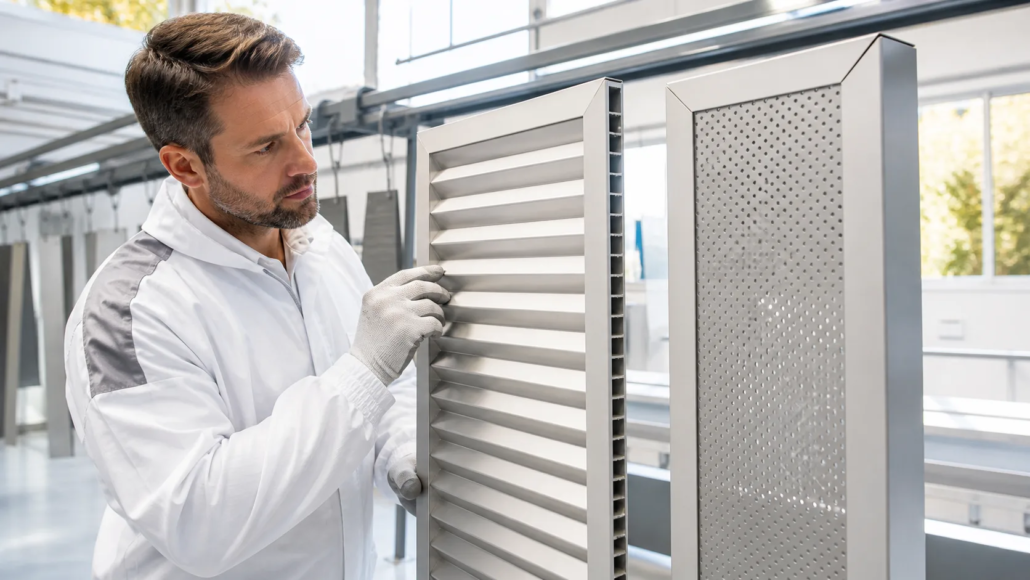
Aluminium louvres and screens can bring shade, privacy, airflow and a strong visual finish to a commercial facade. But they place greater demands on a coating system than flat sheet does. Their shapes, joins and fixing details can impact whether a finish stays clean and protected or develops issues.
For architects, builders, fabricators and facility managers, aluminium louvre powder coating needs to be considered well before components reach site. Across South East Queensland, heat, UV exposure, humidity, rain and airborne contaminants all put exterior finishes to work. We help project teams look beyond colour selection to surface preparation, application access, coating build and warranty requirements, so risks can be dealt with while changes are still practical.
Why Louvre Blades Put Edges Under Pressure
Louvre blades often have a large amount of exposed edge compared with their broad face area. Blade ends, profile changes, punched holes, cut-outs and mounting points can be harder to coat evenly than open, flat surfaces. A sharp edge may receive less powder build if the profile and application method are not planned carefully.
Electrostatic powder application adds another layer to the job. Powder is naturally drawn towards open faces, while narrow returns, recessed corners and deep profile sections can be more difficult to reach. We need to consider how each part can be hung, positioned, coated and checked before it moves through production.
Horizontal blade geometry can also hold water, salt deposits, leaf litter and airborne grime around brackets, end caps and joints. If drainage is poor, those hidden areas may remain wet longer than the exposed face. Different metals at connections can create another concern if the detail allows moisture to sit at the interface.
Before fabrication, we recommend reviewing details such as:
- Softened rather than overly sharp exposed edges
- Fully finished blade ends and protected cut areas
- Drainage paths that do not direct water into brackets or joins
- Cleaning access around horizontal surfaces and concealed connections
- Fixing details that avoid trapped moisture and coating damage
Spring is a sensible time to review these details. The coming months bring stronger sun, storms and more outdoor maintenance activity, making it easier to spot where facade components may collect debris or where cleaning access has been overlooked.
How Screen Systems Concentrate Risk at Joints
Screens may have fewer continuous blade edges than louvres, but they often concentrate risk at their joints. Folded corners, panel splits, welds, mechanical fixings, frames and connection points all need to work with the coating process. When design, fabrication and finishing are treated as separate tasks, these areas can become weak points.
Narrow gaps between screen members can trap moisture and contaminants. They can also be difficult to prepare, coat, inspect and clean. This is particularly important where assemblies are put together before coating, or where contact faces are inaccessible once panels are joined.
Mixed materials deserve close attention. Stainless steel fasteners, aluminium panels, steel brackets and sealants must be selected and detailed to avoid water traps, galvanic corrosion risks and accidental damage to the finished coating. Post-coating drilling, cutting or welding should never be treated as a minor site adjustment. It needs a defined repair process, as the original warranty may not automatically continue after the coating is disturbed.
Early coordination gives the whole project a cleaner path forward. We work through panel splits, joint widths, hanging points, masking needs and access for application before large screen assemblies are completed. That makes it far easier to achieve consistent coverage and inspect the areas that matter most.
Specify Aluminium Louvre Powder Coating Before Fabrication
A coating specification should start with the building and its exposure. The project type, location, orientation, elevation, UV exposure and maintenance access all influence what may be suitable. Coastal conditions, nearby pools, fountains and other water features also need to be identified early.
For architectural aluminium, Dulux Alumi Shield provides separate colour protection against fade and chalking, plus durability protection for film integrity, including peeling, cracking and flaking. Warranty suitability depends on correctly classifying the project and its environment, whether mild, severe or tropical.
A useful specification review includes:
- Aluminium substrate type and component geometry
- Building exposure, including sun, humidity and proximity to liquids
- Selected Dulux powder system and expected performance level
- Preparation, application and inspection requirements
- Ongoing cleaning and recorded maintenance
Alumi Shield warranty pathways require application by a Dulux Accredited Powder Coater and a maintenance program documented in line with Dulux requirements. The relevant environment must sit within a pH range of 5 to 9, and the products are not intended for immersion in liquid. Projects near pools, fountains or similar features need specific product and exposure advice.
AAMA 2603, AAMA 2604 and AAMA 2605 are recognised benchmarks that can help teams compare durability expectations. They are helpful reference points, but they do not replace a project-specific coating specification, an approved preparation process or written warranty confirmation.
Align Warranty Evidence With Site Exposure
It is important to match the warranty program to the actual substrate. Dulux Steel Shield applies to eligible mild steel substrates, including black, blue, bright and semi-bright steel. It is not an aluminium warranty and should not be used to support warranty claims for aluminium louvres or screen panels.
Steel Shield may still come into play where a project includes mild steel support frames, brackets or associated steelwork. These pieces should avoid sharp edges, unsealed hollow sections and narrow crevices. Required preparation includes washing, degreasing, edge grinding and abrasive blast cleaning to SA 2.5, with exposed areas correctly sealed. As with aluminium systems, the warranty conditions also rely on regular maintenance.
For demanding exterior applications, Interpon D2525 is an ultra-durable architectural powder coating range suited to louvre systems, windows, doors and balustrades, including for high UV and humid settings. When it is applied by an Interpon D Approved Applicator and subject to the applicable project terms, it carries a 25-year film integrity warranty and a 15-year colour warranty.
Warranties are no substitute for good design, correct application or maintenance. Before fabrication proceeds, the project record should clearly confirm substrate eligibility, environmental classification, powder system, applicator requirements, cleaning obligations and the specific warranty conditions that apply.
Turn Smart Planning Into Lasting Coating Performance
Louvres and screens do not have one universal coating answer. Blade ends, exposed edges, panel joins, drainage points, brackets and maintenance access all deserve review before materials are ordered. A finish can only protect the areas it can properly reach, cover and cure.
The strongest outcome comes from matching the substrate, component geometry, site exposure, powder range, preparation standard and approved application process. Resolving those details early helps protect the facade finish and preserves the evidence needed for the right warranty pathway.
Get Expert Coating Advice for Your Next Louvre Project
Ipswich Powder Coating can assess your project requirements and provide aluminium louvre powder coating suited to the component design and exposure conditions. We work with commercial teams to clarify preparation, coating systems and documentation before application begins. Get in touch with our team to discuss your louvres or request project guidance.

